How It Works
Renovation As-Builts Sketch to CAD Room Redecoration Pitch Visuals
For Firms About Contact Join Waitlist

Architecture AI That Gets the Dimensions Right

Turn rough sketches, hand-drawn floor plans, and site photos into dimension-accurate, editable CAD files and 3D renders in seconds. Deterministic AI extraction — not generative guessing.

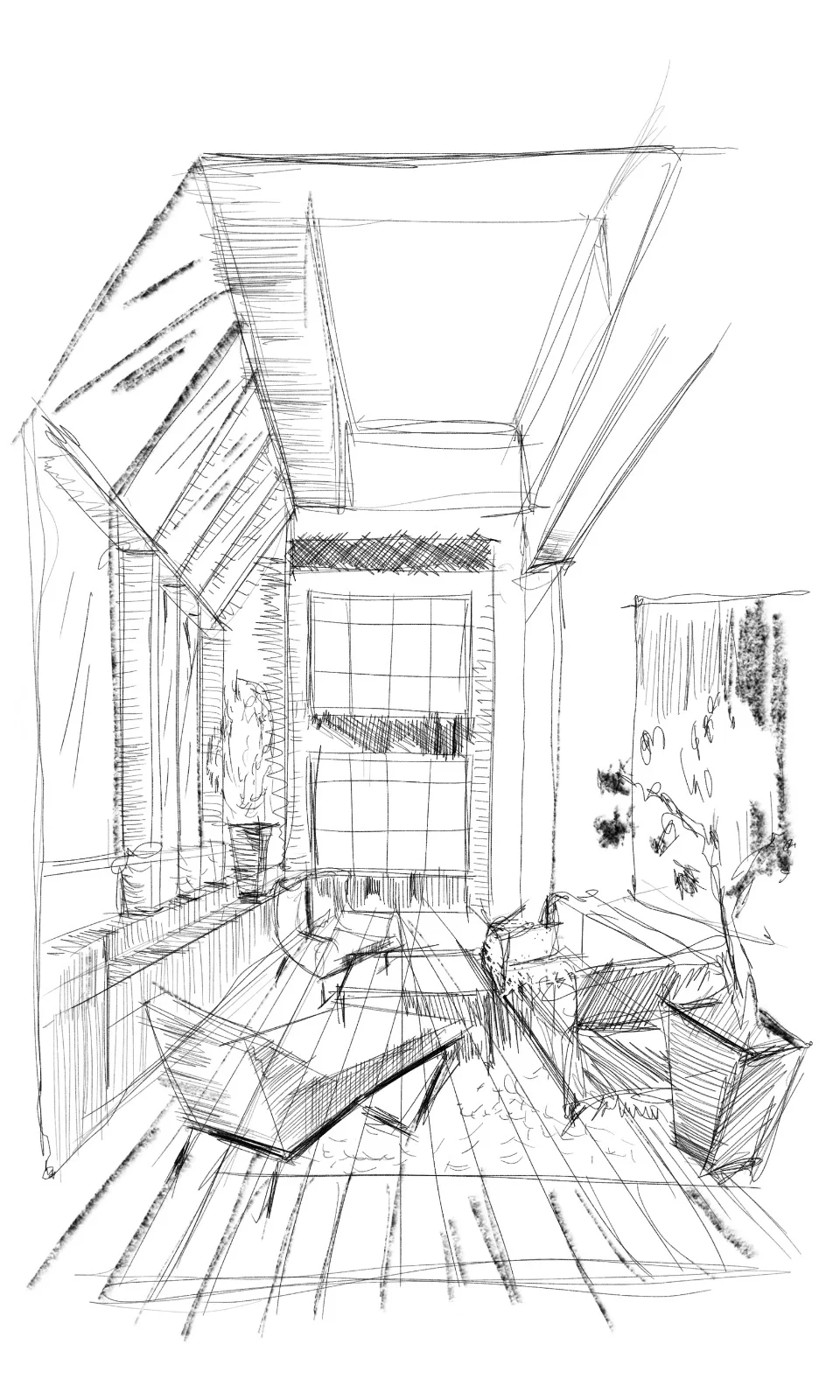
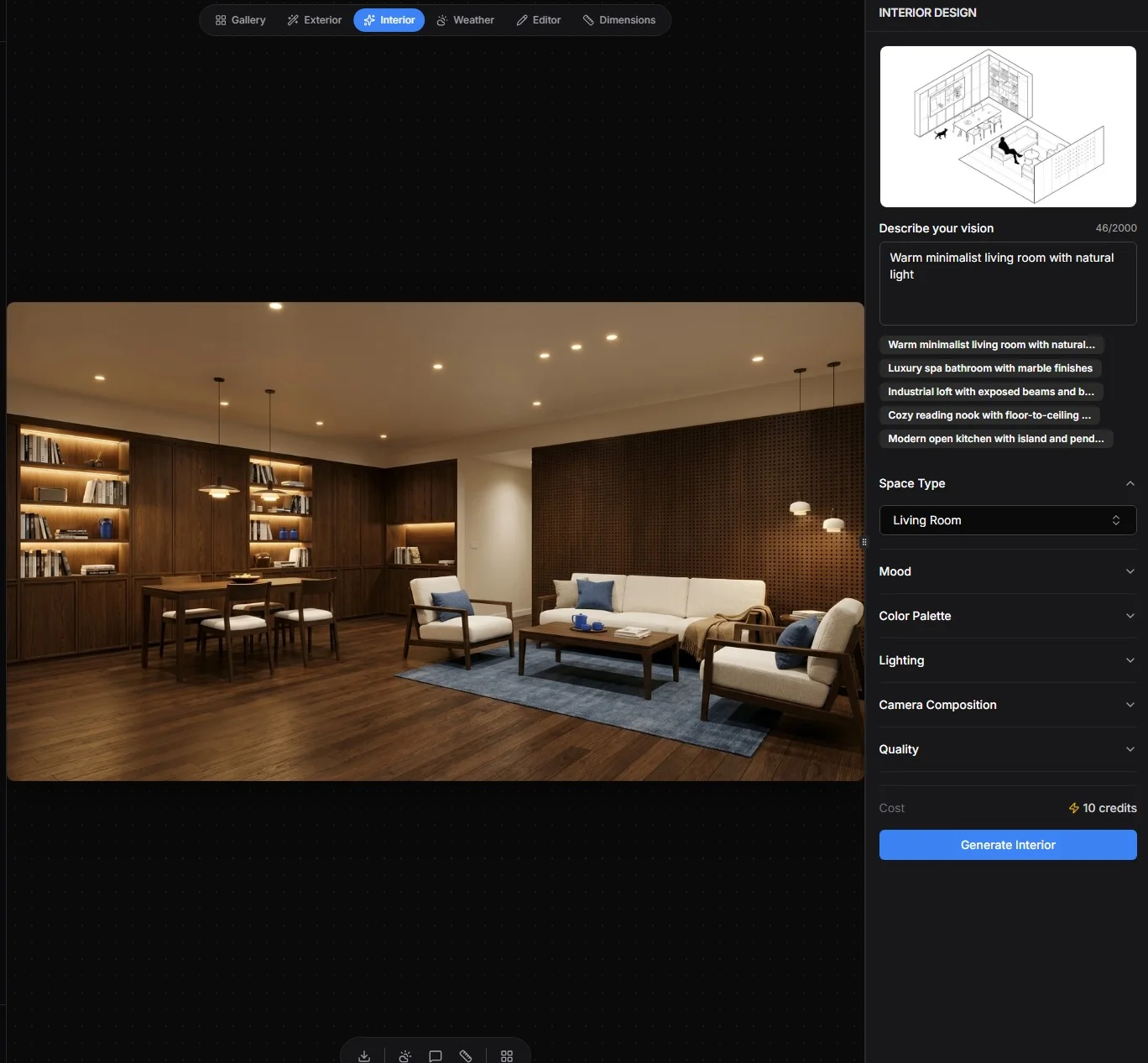
Hand-drawn architectural sketch Photorealistic room render from sketch
Before After

Trusted by architects at

C3D Architects WebWisp Integra.Nos

From Sketch to Editable Floor Plan in Three Steps

Step 1 — Upload

Upload Any Sketch, Photo, or Scan

Hand-drawn napkin sketch, site photograph, scanned PDF — ArchLab accepts any input format.

Step 2 — Extract

AI Extracts Real Dimensions Deterministically

Walls straighten. Angles snap to true values. Every measurement is derived from geometry, not predicted.

Step 3 — Export

Export to CAD, 3D Render, or Both

Download editable DXF/DWG files ready for Revit, AutoCAD, or ArchiCAD.

See AI Precision in Action

Room photograph with AI-extracted dimension overlay lines in cyan

From photograph to dimension-mapped spatial data in seconds.

15s

Sketch to Floor Plan

0

Dimension Hallucinations

22%

Schematic Hours Recovered

3

Architecture Firm Partners

What Our Partners Say

“We used ArchLab on a commercial retrofit in Chicago and cut our as-built drafting time from two days to under an hour.”
Cristian Nicolaie, C3D Architects

Ready to Stop Drawing and Start Designing?

Join the waitlist for early access to dimension-accurate architecture AI.

How ArchLab Converts Sketches into Dimension-Accurate Floor Plans

A three-step pipeline powered by deterministic computer vision — no generative hallucination, no approximate guesses. Every dimension is derived from real geometry.

ArchLab AI analysis interface showing uploaded sketch
Step 1

Upload Your Sketch, Scan, or Photograph

ArchLab accepts virtually any architectural input: hand-drawn sketches on napkins, scanned floor plans from paper archives, site photographs taken on a smartphone, or even rough PDFs from clients.

Our intake engine normalises orientation, corrects lens distortion from photos, and identifies architectural primitives — walls, doors, windows, and structural elements — before any measurement begins.

  • Accepts JPEG, PNG, PDF, TIFF, HEIC, and WebP
  • Automatic orientation and lens correction
  • Primitive detection: walls, openings, columns, stairs
  • Works with incomplete or partial sketches
Dimension extraction with cyan overlay lines on room photograph
Step 2

Deterministic Dimension Extraction

This is where ArchLab fundamentally differs from generative AI tools. Instead of predicting what a room might measure, our pipeline extracts real dimensions using geometric constraint solving.

Walls are straightened to their true alignment. Angles snap to structurally plausible values (90-degree, 45-degree, or as-built). Every measurement is derived from the spatial relationship between detected primitives — not hallucinated by a language model.

  • Geometric constraint solver, not a generative model
  • Wall straightening and angle snapping
  • Sub-centimetre accuracy from calibrated inputs
  • Zero dimension hallucinations — if it cannot measure, it flags uncertainty
Photorealistic 3D render generated from floor plan
Step 3

Export to CAD, 3D Render, or Both

Once dimensions are extracted, ArchLab generates production-ready output in the format your workflow demands. Editable DXF and DWG files open directly in Revit, AutoCAD, ArchiCAD, and other BIM software.

Need a client-ready visual? Our rendering engine produces photorealistic 3D views from the same extracted floor plan — no additional modelling required.

  • DXF/DWG export compatible with Revit, AutoCAD, ArchiCAD
  • Photorealistic 3D renders from floor plan data
  • Layer-separated output for walls, doors, windows, dimensions
  • Batch processing for multi-room or multi-floor projects

Why Deterministic AI Matters for Architecture

Generative AI hallucinates. In architecture, a hallucinated dimension means a wall that does not fit, a door that does not open, or a structural element in the wrong place. ArchLab takes a different approach.

No Hallucinations

Every measurement output is derived from geometric relationships in your input. If ArchLab cannot determine a dimension with confidence, it flags it rather than guessing.

Reproducible Results

Feed the same input twice, get the same output twice. Our deterministic pipeline eliminates the randomness inherent in generative models.

Professional-Grade Output

Layer-separated CAD files, proper annotation, and BIM-compatible formats. Output that fits into real architectural workflows, not demo-ware.

Double Your Drafting Team's Output Without Doubling Your Liability

Architecture firms are squeezed between rising client expectations and compressing margins. ArchLab gives your team precision AI tools that accelerate schematic work without introducing risk.

Margin Compression Is Killing Small and Mid-Size Firms

The average architecture firm operates on 10-15% net margins. Meanwhile, schematic design and as-built documentation consume 30-40% of project hours. That is your most expensive staff spending their most expensive hours on work that AI should handle.

  • Junior architects spend 60% of their time on drafting, not designing
  • As-built site visits cost $800-2,000 per visit including travel and setup
  • Revision cycles add 15-25% to project timelines
  • Hiring is slow: the average architecture hire takes 4-6 months

The Math

$2,400

Average cost per as-built documentation (site visit + drafting)

$340

Same documentation with ArchLab (phone photos + AI extraction)

86% Reduction

In as-built documentation costs per project

Precision-First AI Built for Professional Liability

Unlike generative AI tools that guess and approximate, ArchLab uses deterministic extraction. Every dimension is measured, not predicted. That distinction matters when your professional liability insurance is on the line.

E&O Compatible

Deterministic outputs with confidence scores. Flag uncertain measurements instead of guessing. Your E&O insurer will appreciate the audit trail.

Data Stays Yours

On-premises deployment option. Your project files never leave your network. SOC 2 Type II compliance roadmap in progress.

Fits Your Stack

DXF/DWG export opens natively in Revit, AutoCAD, and ArchiCAD. No new software to learn, no workflow disruption.

C3D Architects — Chicago Commercial Retrofit

A 12,000 sq ft commercial retrofit project in downtown Chicago. C3D Architects used ArchLab to document existing conditions across three floors.

2 days → 47 min

As-built drafting time

86%

Cost reduction per project

0

Dimension errors requiring revisit

Three-Phase Rollout for Your Firm

We do not just hand you software and disappear. ArchLab deploys in phases, with measurable success criteria at each stage.

Phase 1 — Weeks 1-2

Pilot Project

We run ArchLab on one of your real projects, side-by-side with your current workflow. You compare output quality, time savings, and accuracy against your team's manual work.

Phase 2 — Weeks 3-6

Team Integration

Your drafting team gets hands-on training. We integrate ArchLab into your existing file management and project structure. Custom export templates match your firm's standards.

Phase 3 — Ongoing

Full Deployment

ArchLab becomes part of your standard workflow. Dedicated account manager, priority support, and quarterly reviews to measure ROI and expand use cases.

Request a Firm Demo

See ArchLab run on your own project files. We will process one of your sketches or site photos live and deliver the CAD output within 24 hours.

  • Live demo on your project files
  • CAD output delivered within 24 hours
  • ROI analysis for your firm's project mix
  • No commitment required

Be First in Line for Precision Architecture AI

Join the waitlist to get early access when we launch. Waitlist members receive priority onboarding and founding-member pricing.

Join the Waitlist

Proprietary AI for a $7.8 Trillion Industry That Still Drafts by Hand

ArchLab is building deterministic computer vision infrastructure for the architecture industry. Not another generative AI wrapper — a precision measurement engine with defensible IP.

Why ArchLab

Defensible Moat

Our deterministic extraction pipeline is fundamentally different from generative AI approaches. Proprietary geometric constraint solver with patent-pending methods. Not replicable with prompt engineering.

Massive TAM

Global architecture services: $370B annually. The AEC technology market is projected to reach $15.2B by 2030. ArchLab targets the schematic and documentation phases — 30-40% of all project hours.

Revenue Model

SaaS pricing per-seat for firms (estimated $200-500/seat/month). Enterprise on-premises licensing for large firms. Processing-based pricing for API consumers.

The Team

A cross-functional founding team spanning architecture practice, AI engineering, finance, and operations.

GL

George Lupou

CEO

Vision and product strategy. Deep understanding of architectural workflows and industry pain points.

VS

Vlad Skrypnyk

CFO

Financial strategy and operations. Background in technology business development and scaling startups.

CN

Cristian Nicolaie

COO / Investor

Operations and architecture domain expertise. Owns C3D Architects in Chicago — our first pilot partner.

TP

Thiago Paiva

CTO (via Integra.nos)

Technical leadership. AI and computer vision engineering. Building the deterministic extraction pipeline.

Early Signals

3

Architecture firm pilot partners

127+

Waitlist sign-ups

86%

Cost reduction in pilot project

Request the Pitch Deck

We are raising a pre-seed round to accelerate product development and expand our pilot programme. If you are an angel investor, VC, or strategic partner interested in AEC technology, we would love to share our detailed deck.

  • Detailed financial projections and unit economics
  • Technical architecture and IP overview
  • Go-to-market strategy and timeline
  • Team backgrounds and advisory board

Request Pitch Deck

We Believe Architecture AI Should Be Measured in Millimetres, Not Pixels

ArchLab was founded by architects and engineers who were tired of AI tools that produce beautiful images with wrong dimensions. We built something different.

Making Precision Accessible to Every Architect

The architecture industry is being flooded with generative AI tools that produce stunning visuals — and completely fabricated dimensions. A beautiful render of a room that is three metres wider than reality is not a tool. It is a liability.

ArchLab exists because architects need AI that they can trust with real measurements. Our deterministic extraction pipeline measures spaces — it does not imagine them. Every dimension we output is derived from geometry, verified against constraints, and flagged when uncertain.

We believe the future of architecture AI is not about generating pretty pictures. It is about eliminating the tedious, error-prone manual work that keeps architects from doing what they do best: designing buildings that matter.

ArchLab AI interface

Built by People Who Understand Architecture

Our founding team combines deep architecture industry experience with AI engineering expertise. We have drafted floor plans by hand, and we have built the AI to replace that process.

GL

George Lupou

Chief Executive Officer

Product visionary with deep knowledge of architectural workflows. George identified the precision gap in existing AI tools and assembled the team to solve it.

VS

Vlad Skrypnyk

Chief Financial Officer

Financial strategist with experience scaling technology companies. Manages ArchLab's financial operations, fundraising, and business development.

CN

Cristian Nicolaie

COO & Investor

Licensed architect and owner of C3D Architects in Chicago. Cristian brings real-world architectural practice to every product decision and serves as our first pilot partner.

TP

Thiago Paiva

CTO (via Integra.nos)

AI engineer specialising in computer vision and geometric processing. Leads the development of ArchLab's deterministic extraction pipeline with partner Pedro Ganem.

Company Timeline

Q3 2025 — Idea Validated

George and Cristian identify the precision gap in architecture AI after testing existing tools on real projects.

Q4 2025 — Team Assembled

Vlad joins as CFO. Partnership with Integra.nos (Thiago and Pedro) established for technical development.

Q1 2026 — First Prototype

Deterministic extraction pipeline produces first accurate floor plan from a hand-drawn sketch.

Q2 2026 — Pilot Launch

C3D Architects begins pilot programme. ArchLab AI S.R.L. incorporation filed in Romania. Waitlist opens.

Q3 2026 — Expansion (Planned)

Expand pilot programme to additional firms. Begin pre-seed fundraising. Launch public beta.

Two Continents, One Mission

ArchLab operates across Romania and the United States, combining European engineering talent with American market access.

Bucharest, Romania

Headquarters & Engineering

ArchLab AI S.R.L. is incorporated in Romania, leveraging the country's strong technical talent pool and EU regulatory framework.

Chicago, Illinois

Market & Pilot Operations

Our first pilot partner, C3D Architects, is based in Chicago. The US market represents our primary go-to-market focus.

Want to Work With Us?

Whether you are an architect, investor, or potential partner, we would love to hear from you.

Use Case

Walk In. Photograph. Walk Out with a Dimensioned Floor Plan.

Stop spending two days on as-built documentation. ArchLab turns site photographs into dimension-accurate floor plans in minutes, not days.

As-Built Documentation Is the Most Hated Task in Architecture

Every renovation project starts the same way: send two people to the site with tape measures and laser scanners, spend a full day measuring every wall, door, and window, come back to the office, and spend another day drafting it all up in CAD.

If anything was missed — and something is always missed — schedule another site visit. Each revisit costs $800-2,000 in billable hours and delays the project timeline.

  • Average as-built documentation: 2-3 days per project
  • 30% of site visits require a follow-up measurement trip
  • Junior architects spend more time measuring than designing
  • Laser scanners cost $30,000-80,000 and require training
AI dimension extraction from room photograph
ArchLab AI interface showing rendered result

Photograph the Room. ArchLab Handles the Rest.

Walk into the space with your smartphone. Take photographs of each room. Upload to ArchLab. Within minutes, you have a dimensioned floor plan with walls, doors, windows, and structural elements identified and measured.

No tape measure. No laser scanner. No second visit. No junior architect spending two days in CAD.

  • Works with smartphone photographs — no special equipment
  • Dimensions extracted deterministically from geometry
  • DXF/DWG export ready for your CAD software
  • Uncertainty flagged, never guessed

Three Steps to a Complete As-Built

Step 1

Photograph the Space

Walk through the space taking photos with your smartphone. Cover each room from multiple angles for best results.

Step 2

AI Extracts Dimensions

ArchLab identifies walls, openings, and structural elements, then derives real dimensions using geometric constraint solving.

Step 3

Download CAD File

Export a layer-separated DXF/DWG file ready for Revit, AutoCAD, or ArchiCAD. Start designing immediately.

Stop Measuring. Start Designing.

Join the waitlist to be among the first architects to eliminate as-built documentation drudgery.

Use Case

Your Napkin Sketch, Clean CAD File in 15 Seconds

Turn hand-drawn floor plans, whiteboard sketches, and rough concepts into production-ready, dimension-accurate CAD files instantly.

Great Ideas Die in the Translation from Sketch to CAD

Every architect knows the moment: a brilliant concept sketched on a napkin, a whiteboard, or the back of an envelope. But between that sketch and a usable CAD file lies hours of tedious manual drafting.

By the time the sketch becomes a CAD file, the momentum is gone. The design review is next week. The client meeting is tomorrow. The junior architect assigned to digitise it has three other projects. Great ideas lose their urgency when they take too long to formalise.

  • Average sketch-to-CAD time: 2-4 hours for a simple floor plan
  • Design iteration slows to the speed of manual drafting
  • Early concepts lack dimensional rigour, leading to rework later
  • Sketches get lost or misinterpreted in the digitisation process
Hand-drawn architectural sketch
Clean render generated from sketch

Snap a Photo of Your Sketch. Get a CAD File Back.

ArchLab accepts any hand-drawn sketch — napkin, whiteboard, graph paper, tablet drawing — and converts it into a dimensioned, editable CAD file in approximately 15 seconds.

Walls are straightened. Angles are snapped to true values. Dimensions are derived from the geometric relationships in your sketch. The result is a production-ready DXF/DWG file that opens directly in your CAD software.

  • 15-second conversion from photo to CAD
  • Wall straightening and angle correction
  • Automatic door, window, and opening detection
  • Instant design iteration — sketch, scan, refine, repeat

From Sketch to CAD in Three Steps

Step 1

Sketch Your Idea

Draw on anything — napkin, whiteboard, graph paper, or tablet. Include walls, doors, and windows as you normally would.

Step 2

Photograph and Upload

Take a photo with your phone or scan with any scanner. Upload to ArchLab. The AI analyses the sketch immediately.

Step 3

Download Clean CAD

Get a dimensioned DXF/DWG file with straightened walls, snapped angles, and layer-separated elements. Open in any CAD software.

Turn Sketches into CAD Files in Seconds

Join the waitlist for early access to the fastest sketch-to-CAD pipeline in architecture.

Use Case

Show Clients Their Redesigned Room Before You Move a Single Piece of Furniture

Generate photorealistic redesign visuals from existing room photographs. Help clients see the vision before any work begins.

Clients Cannot Visualise What They Cannot See

Interior designers and architects know this frustration: you describe a redesign concept, show mood boards and material samples, but the client still cannot picture the final result in their actual space.

This leads to endless revision cycles, scope creep, and sometimes lost projects. Clients defer decisions because they cannot commit to a vision they cannot see. Projects stall. Timelines stretch.

  • 65% of design clients struggle to visualise proposed changes
  • Mood boards and material samples lack spatial context
  • 3D modelling for redesign proposals takes days to produce
  • Revision cycles add 20-30% to project timelines
AI-rendered living room redesign
ArchLab AI rendering interface

Photograph the Room. Describe the Changes. Show the Result.

ArchLab takes a photograph of the existing room, extracts its dimensions and spatial layout, then generates a photorealistic render showing your proposed redesign — with accurate proportions and real dimensions.

Because we start with deterministic dimension extraction, the rendered result is spatially accurate. Furniture fits. Proportions are correct. Clients see exactly what the finished space will look like.

  • Photorealistic renders from room photographs
  • Spatially accurate — furniture and elements are correctly proportioned
  • Multiple style variations in minutes, not days
  • Client-ready visuals for presentations and approvals

Redesign Visualisation in Three Steps

Step 1

Photograph Existing Room

Take photos of the current space with your smartphone. ArchLab extracts dimensions and spatial layout automatically.

Step 2

Describe Your Redesign

Specify style changes, furniture selections, colour palettes, and material choices. ArchLab applies them to the real spatial layout.

Step 3

Present to Client

Share photorealistic before-and-after visuals. Clients approve with confidence because they can see exactly what they are getting.

Help Clients See Their Dream Space Today

Join the waitlist for early access to AI-powered redesign visualisation.

Use Case

Win the Pitch Before Your Competitor Finishes Their First Sketch

Generate photorealistic project visuals from rough concepts in minutes. Show clients the finished result before anyone else can even start drafting.

Pitches Are Won on Visuals, Not Qualifications

The architecture firm that wins the project is rarely the most qualified — it is the one that helps the client see the vision most clearly. But producing compelling visuals for a pitch takes days of work, often unpaid, with no guarantee of winning the project.

Small and mid-size firms lose pitches to larger competitors not because of inferior design talent, but because they cannot afford to invest 40+ hours of spec work in photorealistic renders for every proposal.

  • Average pitch preparation: 40-80 hours of unpaid work
  • Photorealistic renders: $2,000-5,000 per scene (outsourced)
  • Win rates for competitive pitches: 15-25%
  • Smaller firms often submit with sketches while competitors show renders
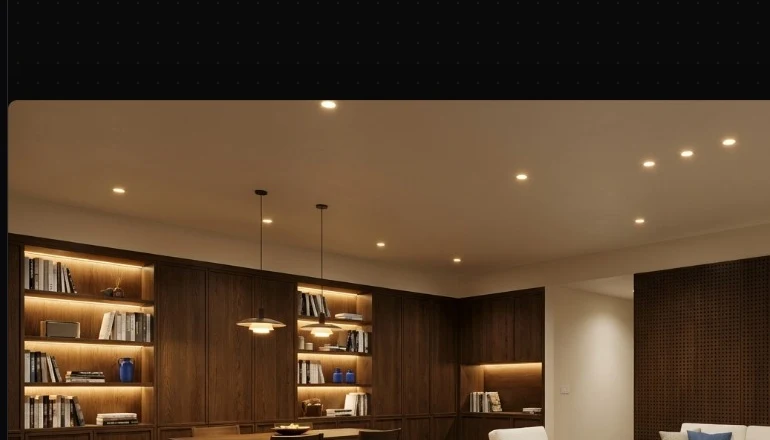
Photorealistic architectural render
AI-generated pitch visual

From Concept Sketch to Pitch-Ready Render in Minutes

ArchLab lets you sketch a concept, upload it, and receive a photorealistic render with accurate proportions in minutes. Use it in your pitch deck, your client presentation, or your proposal document.

Generate multiple design variations quickly. Show the client three options instead of one. Iterate based on feedback in real time during the presentation.

  • Concept-to-render in minutes, not days
  • Accurate spatial proportions from deterministic extraction
  • Multiple design variations for the same brief
  • Iterate live during client presentations

Pitch-Ready Visuals in Three Steps

Step 1

Sketch Your Concept

Draw your design concept on any medium. Include the key spatial elements and design intent.

Step 2

AI Generates Render

ArchLab extracts the spatial layout, applies materials and lighting, and produces photorealistic visualisations.

Step 3

Present and Win

Include the renders in your pitch deck. Show multiple variations. Iterate live based on client feedback.

Win More Pitches with Less Effort

Join the waitlist for early access to AI-powered pitch visual generation.

Pilot Results from Architecture Firms Using ArchLab

Real projects, real metrics, real results. See how architecture firms are using ArchLab to transform their workflows.

C3D Architects

C3D Architects

Chicago, Illinois • Commercial Architecture

Project Overview

A 12,000 square foot commercial retrofit in downtown Chicago. C3D Architects was engaged to document existing conditions across three floors and produce as-built drawings for a full interior renovation. The building was constructed in the 1920s with no reliable existing drawings available.

The Challenge

Traditional approach would require a two-person team spending two full days on site with laser measuring equipment, followed by two additional days of drafting in AutoCAD. Total estimated cost: $4,800 in labour, equipment, and travel. Timeline: one week from site visit to deliverable drawings.

The ArchLab Approach

One architect visited the site with a smartphone. Over 90 minutes, they photographed every room from multiple angles. The photographs were uploaded to ArchLab, which extracted dimensions, identified structural elements, and generated a complete floor plan within 47 minutes of processing time.

2 days → 47 min

Drafting time reduction

$4,800 → $680

Total project cost

0

Required revisits

Key Takeaways

  • 86% reduction in as-built documentation costs
  • Zero dimension errors requiring site revisits
  • DXF output opened directly in AutoCAD without modification
  • Freed junior architect for 1.5 days of design work
“We used ArchLab on a commercial retrofit in Chicago and cut our as-built drafting time from two days to under an hour. The accuracy was indistinguishable from our manual measurements.”

— Cristian Nicolaie, Principal, C3D Architects

Want to Be Our Next Case Study?

We are actively expanding our pilot programme. Join as a pilot partner and get early access to ArchLab at founding-member rates.

Frequently Asked Questions

Everything you need to know about ArchLab's architecture AI platform. If your question is not answered here, get in touch.

ArchLab's deterministic extraction pipeline achieves sub-centimetre accuracy when working with calibrated inputs (photographs with a known reference dimension or properly scaled scans). For uncalibrated smartphone photographs, accuracy depends on image quality and angle, but proportional relationships between dimensions remain consistent. Importantly, when our system cannot determine a measurement with high confidence, it flags the uncertainty rather than guessing. This means you will never receive a fabricated dimension — you will receive either a confident measurement or a clearly marked uncertainty flag that prompts manual verification.

ArchLab accepts a wide range of input formats: JPEG, PNG, WebP, TIFF, HEIC (iPhone photos), and PDF. This includes hand-drawn sketches on any medium (napkin, whiteboard, graph paper), scanned architectural drawings, smartphone photographs of rooms and spaces, tablet drawings, and even low-quality copies of existing plans. Our intake engine normalises orientation, corrects lens distortion from photographs, and handles varying image quality levels.

ArchLab exports to DXF and DWG formats, which are natively compatible with Revit, AutoCAD, ArchiCAD, and virtually every other CAD and BIM platform. Output files are layer-separated (walls, doors, windows, dimensions, annotations on separate layers) following standard architectural drawing conventions. We are also developing direct Revit family integration and IFC export for BIM workflows.

Data security is a core priority. All data is encrypted in transit (TLS 1.3) and at rest (AES-256). Project files are processed in isolated environments and are not used to train our models. We do not share project data with third parties. For firms with strict data governance requirements, we offer an on-premises deployment option where your data never leaves your network. We are on a SOC 2 Type II compliance roadmap with expected certification in 2027.

Generative AI tools create images by predicting what something should look like. They produce beautiful visuals but fabricate dimensions, proportions, and spatial relationships. A room rendered by Midjourney might look photorealistic but be three metres wider than reality, have doors that open into walls, or windows that float above the floor line.

ArchLab uses deterministic computer vision — not generative AI — to extract real measurements from your inputs. Every dimension is derived from geometric constraint solving. When we do generate renders (for visualisation use cases), they are built on top of the verified spatial data, so proportions and dimensions are accurate. The fundamental difference: generative AI imagines spaces; ArchLab measures them.

We are currently in pilot phase and have not announced public pricing. Waitlist members will receive founding-member pricing that will be locked in for the lifetime of their subscription. For firms interested in piloting ArchLab, we offer a free evaluation on one of your real projects — we process your files and deliver the output so you can evaluate quality before committing. Contact us through the firm demo form for details.

Yes. ArchLab can process inputs floor-by-floor and generate separate floor plans for each level. Our system maintains spatial consistency between floors (stairwell locations, column alignments, structural grids) when processing a multi-storey project. For our C3D pilot project, we successfully processed a three-floor commercial building from smartphone photographs taken during a single 90-minute site visit.

Still Have Questions?

We are happy to answer any questions about ArchLab. Reach out directly or join the waitlist for updates.

Let's Talk

Whether you are an architect interested in piloting ArchLab, an investor, or a potential partner, we would love to hear from you.

Send Us a Message

For Firms

firms@archlab.ai

For Investors

investors@archlab.ai

Headquarters

ArchLab AI S.R.L.

Bucharest, Romania

US Operations

Chicago, Illinois

United States

Privacy Policy

Last updated: April 17, 2026

Terms of Service

Last updated: April 17, 2026